
“Teleology is like a mistress to a biologist; he cannot live without her, but he’s unwilling to be seen with her in public.” – J.B.S. Haldane
Finding purpose is just like the elephant in the room – once it’s somehow noticed, there appears to be no get-ting rid of it. – the author
MEANS TO AN END: An Implicit Implication
TELEOLOGY IS THE STUDY OF PURPOSIVENESS: In classical Greek philosophy, it was an in-terpretative methodology whereby the explanation of phenomena is made sensible according to the purposes they serve – rather than their causes… Its name is derived from the two Greek words telos and logos.
TELOS means “end”; that for the sake of which something is done or occurs. In its most contem-porary sense, telos pertains to a thing’s evident purpose, its aim, or its ultimate goal. However, being idiomatic to ancient Greek language (and its own history of thought) – telos is an archaic word possessing a range of subtle meaning – and to classical philology, it remains a term of not-able interest and semantic conjecture.
LOGOS is a familiar ancient word that remains seminal to the corpus of Greek thought; as a polysemic term in a field of related studies, even in antiquity, the nuance of its interpretation was itself the subject of doctrine. From the disciplines of rhetoric, to those of philosophy and theology – derived from the Greek lego (“I say”) – its sense carries with it a range of meaning from “speech”, to “explanation”, to “reason”, to “word”.
Then vs. Now; Tail vs. Head 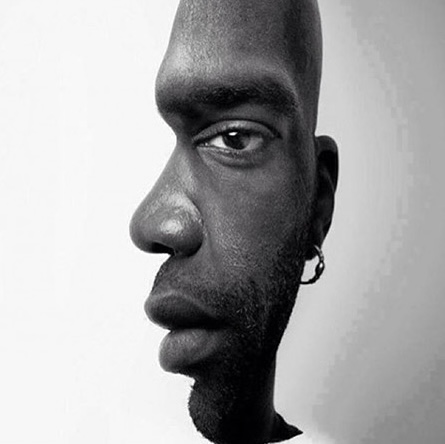
A Tale of Tangled Viewpoints
AS A METHOD OF APPROACH TO HUMAN KNOWLEDGE teleology has suffered setbacks in our modern times – the tarnish on its name being somehow caused or owed to a certain kind of “implicit” modern stigma: What many would refer to today as “intelligent design”. Having once been regarded for its virtue – but now in someways out of fashion – it is simply because “an aim” implies intelligence (because intelligence implies an agent) – that (now) it’s much to our chagrin (teleologically speaking, that is): Something like an unwanted passenger (which would be some ways like the elephant in the room ) – our so-called “problem with a purpose” (that is implicit to our language) – has passed down hand-in-hand through time – “together” with the subject of its discipline..* Which is “the reason” why nowadays (owing to its purpose – so to speak) – that like an unseemly bedfellow – any kind of teleologic approach becomes a slippery kind of slope – for the “modern man” of science. And much like any fall from grace – it was all downhill from there.
As a truth begets the lie, so the lie begets the truth. – Anon
As above, so below – Hermes Trismegistus
 THE PROBLEM WITH A PURPOSE: “CAUGHT” WITHIN A RHETORICAL FRAME
The “Figure of Speech”; a Polytropic Form of Entanglement 
“A mirror mirroring a mirror” – Douglas Hofstadter 
Intelligent Design – or a Double Edged Sword?  Infinite Regression to the Mean (or “the form” of self-reference?) Turtles all the way down:
WERE ONE TO PUT IT IN A NUTSHELL: Like a form of double trouble (somehow getting two for the price of one) – Teleology has become something of a problem inside a problem for mod-ern science… Owing to its reason (like an inconvenient sort of truth), regardless of our endeav-ors, however hard we may try – somehow “in the end” – one can neither sidestep nor escape a certain form of predicament; a sort of double bind that is somehow “both at once” – a dilemma of our logic, and a logical dilemma. And being someway like a self-fulfilling prophecy (something like our “chicken & the egg”) it is a problem that’s both implicit to its “mean” – as it is equally the fated outcome of teleology’s “own” – teleological implication; something that in one way or the other (hitting close to home) we all inevitably “face” in-tandem with the subject of its discipline. So much so that nowadays (being consequently unable to sidestep its certain implication) – like a line drawn in the sand – it seems that we must choose (a position or a side) – so that we might somehow come to terms with BOTH a fundamental truth AND the one confounding fact – of its own unavoidable conclusion… So that whether it comes down to rhetoric, to biology, to physics, or cosmology (whichever way it is that one might “choose”): WHEN IT COMES RIGHT DOWN TO ASK ITS QUESTION (does there appear to be an end behind its purpose) – the problem with our “subject” is simply this:
A FUNDAMENTAL TRUTH: ONE CANNOT TAKE “THE AIM” OUT OF “PURPOSE”… We might think it’s someway possible – but it is somehow in ‘the end’ (and by its very definition): Purpose can neither be removed or subtracted from itself (or from anything for that matter) – without it someway achieving its own “end”…
Which would consequently lead us to that other troublesome problem…
THE CONFOUNDING FACT: ONE CANNOT EVEN TRY TO TAKE THE “AIM” OUT OF “A PUR-POSE”, WITHOUT IT SOMEWAY BEING ON PURPOSE… (which for a person with intelligence – by design – could present one with something of a pickle.)
Which might prove aim-less in what follows…
AN UNAVOIDABLE CONCLUSION: WE MAY AIM, AND WE MAY TRY – THAT WE MAY TIE OURSELVES IN KNOTS; HOWEVER, IN THE END: WE CAN’T EXPLAIN “THE END” WITH-OUT “A PURPOSE” (because we cannot “part” the logos from its telos – we cannot take a telos from its logos).
WHICH IF YOU THINK TO ASK THE QUESTION also means to say: We can’t explain “the end” out of “the word”; cause as “de-signs” of our intelligence – they are always “done” on purpose.

THEREFORE IN THE END – as a “matter of reason” for science (teleologically speaking, that is): It is simply because “the one” becauses “the other” – that any kind of teleological approach has proved so maddeningly circular for its modern form of empiricism… And whether “by design” or not – by appearing either way (so one may somehow choose ) – the way it “frames” its question became the fate of its approach – because when we’re speaking teleologically, the problem with its mean (which is the problem of our measure) can be something like the argument of whether (or not) the cup is “half-empty” or “half-full” (which as everybody knows, would depend on how you look at it)… And as if being in “a whole” we’re not “a part of” (or as if clutching to a straw or to a fig-leaf), it would be somehow in the end – that balancing teleology’s (own) inherent virtue with its “seeming implication” – would prove far too great an ask (or risk) – for its (own) empiric-al lens… And while un-provably so – it was only a matter of time (or inevitability) – that likewise (in the end), any form of teleological thought would someday “find itself” – excommunicated – from the church of modern science, only to be deemed (ironically) somehow outside the scope of its (own) modern purview… While however (and in the end) – as Mark Twain would once put it: “Denial ain’t just a river in Egypt…”
ERADICATING THE AGENT (the inconvenient truth)  The “Mark” of an Intelligence: The Teleology of “Teleonomy”
SO IT WAS that with a nip here, and a tuck there (and in a sotto-voce fashion): That given all its implicit logic – but wedded equally hand-in-hand, “together” with its own inexorable problem (that any kind of “purposed-end” implies for modern science); that given all its “double trouble” (with the shout of hallelujah) – a once unseemly bedfellow – “once” the elephant in the room – would one day “find itself” – conveniently “re-purposed” and rebranded… Whereby in a modern manner of speaking (to the science of our time ) – as the shadow of its former self (through ruse of modern guise) – its once familiar image – could be cleverly repackaged – as its new improved (but once familiar) form… Then it was somehow et voila ( just like the empiricist’s new clothes): That through a sleight of modern language – its reason’s now re-labeled “teleonomy”…
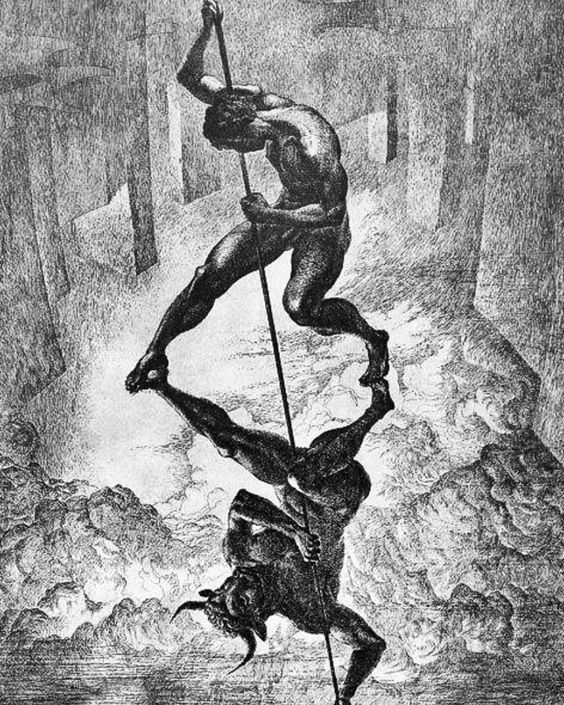
THE UNMOVED MOVER
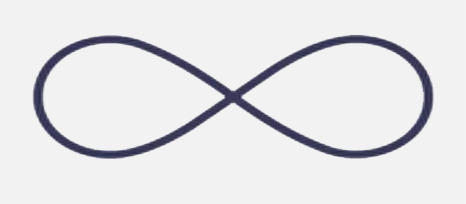 “Everything that is a proposition of logic has to be in some way or the other like a tautology.” – Bertrand Russel
SIGN OF GOD – OR THE SIGN OF ITSELF 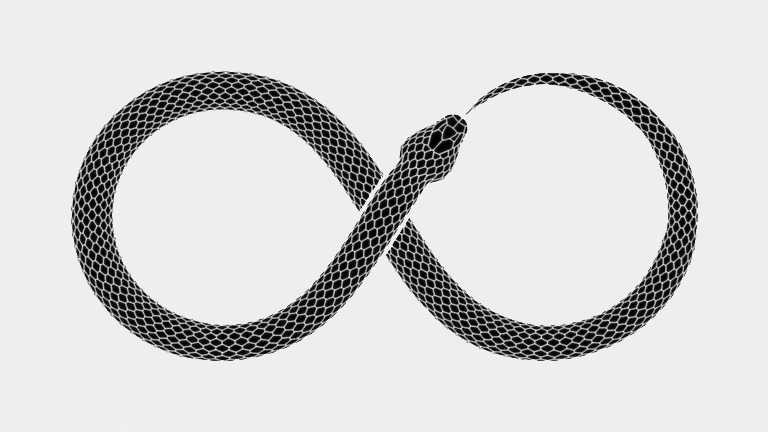
TAUTOLOGY is yet another distinguished term having origins in ancient Greek language; as a device or tool of rhetoric its name means “repeating what’s been said”.. Made in the likeness of its own image (being somehow true to form) a tautology is a statement or expression in which the same “thing” is said twice but in different words (the “one” relying on “the other”) so that its own reflexive point (its “axis” – so to speak) becomes the meaningful equivalence between two parallel phrases or related terms… The prefix tauto literally means “itself”; it forms a grammat-ical contraction between the two Greek words “to” + “auto” – meaning “the self’ or “the same”. Thus a to-auto-logos (in a manner of the rebus or a palindrome) literally connotes the form, im-age, or idea of “the self explanation”. Much like a truism, a tautology can be understood in terms of a self-evident statement of what is plain or what is obvious. However for the tautology, what is most important for “itself” – what is most pivotal – has everything to do with what’s implicit; because what would be “implicit”, would be (both) equally and at once that very fact (or quality which it has or it “posseses”) that by its “own definition”: “Is” what it says ‘it’ is to be.. Because it’s somehow in the end – someway describing itself … Curiously performing as its own generative principle – simply to exist as its own very “reason” for being; which would be namely – referring to “itself” – as if “it” – were nothing but the implicit re-iteration of “its” own “subject”: Cause at the end of the day – “it” – is no-thing but a frame (that someway ‘pictures’); which like the some- thing called our “consciousness” – is no-thing – but “a portrait” – of a self-referring system – re-ferring to “the frame” which is “its” – “self” (that is )… Such that being “what it is” (by belonging to itself, while being no-thing ), it so becomes its own explanation, being nothing but the reason behind its very own purpose: Because it’s some “HOW” – in the end – “nothing” and “the story of itself”… So like a story in the logic of a mirror: BEING “LIKE” A MIRROR (someway “this” and “that” – while it is someway “that” but “this”) – it would appear to be the nature of its very own ‘subject’ to be structurally edified by a fact of its (own) recursion; cause while its someway look-ing back (while it is someway vice-versa) – it would be built upon “THAT” reference to its “self”. So for all its means and purpose: Like the pivot, or a fulcrum (or an axis – or the language we call consciousness), a tautology’s raison d’etre literally would have every “thing” – to do – as the re- presentational “form” of its own descriptive function. Such that being “in and of itself” (created in the “likeness” of its own image ) ONE could even say: WHAT IT IS – “IS” – WHAT “IT” DOES.
SUCH THAT WHILE IT’S BEING WHAT IT DOES – it so “becomes” what-ever it might do.
Ehyeh asher Ehyeh – Exodus 3:14

BECAUSE AN “X” MARKS THE SPOT 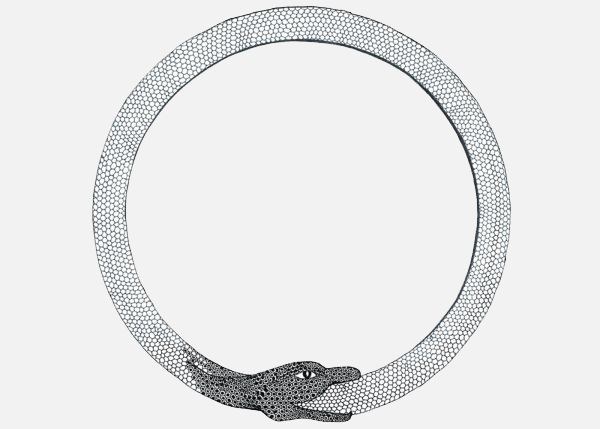
A-PARENT STRUCTURE (the “familiar” form)
TO BRING THE MATTER HOME – consider what is known in certain academic circles as “the Anthropic principal”. With anthropos meaning “human” in Greek – according to Wikipedia, the anthropic principal is a philosophic consideration that says “observations of the universe must be compatible with the conscious sapient life that observes it” and “that any working theory of the universe will be necessarily constrained by the need to allow for human existence.” In the fields of astrophysics and cosmology – the anthropic principal has been proffered as a logical argument to account for the emergence of human life (or of consciousness) in terms which are deemed obvious or “self-evident”… It posits (more or less) that observers are necessary to the existence of a universe… Or put a bit more plainly: That the “spectacle” of the world – requires an audience. Taken at face value, the anthropic principle addresses the bare necessity of things being as they are. Very simply put: Things are the way they are – because – that’s the way they are… Through its teleologic approach to the story of life in our cosmos, the Anthropic principle is both a truism and a tautology clearly expressed – but in its own oblique terms:
IF LIFE WERE NOT POSSIBLE – THEN NO ONE WOULD KNOW IT. **
Continue on to Chapter 6: “THE SLANG OF AGES”

* Synchrony vs. Diachrony
** A possible solution to “the liar’s paradox”
Header image: “Relativity” by M.C. Esher
 the telos of history